Recycling labels and claims

What recycling labels are required on packaging in the UK?

Separate EPR reporting, the RAM result, consumer disposal instructions and marketing claims before approving on-pack recycling wording.

Direct answer

EPR and RAM do not currently create a general UK legal duty to place a recyclability label on packaging.

GOV.UK’s Recyclability Assessment Methodology supplementary guidance states that RAM does not include recyclability-labelling guidance and that there are no legal obligations for recyclability labelling under EPR for packaging. That was the official position checked on 1 September 2026.

This does not mean that any recycling statement may be printed without evidence. Product-specific rules, voluntary labelling-scheme requirements, retailer policies and requirements in other markets can still apply. Environmental wording must be accurate for the exact finished pack, clear about what it covers and supported by current evidence.

Do not treat this page as artwork approval. Recheck the current official position, the intended market, the complete pack and the relevant labelling scheme before printing.
Packaging components that need evidence before a recycling label is approved
Four separate decisions

Do not use one result for four different purposes

DecisionPurposeWhat to retain
RAM ratingSupports relevant EPR recyclability reporting and fee modulation for the applicable reporting year.The assessed pack, component data, methodology version, decision path and result.
Consumer disposal instructionTells the user how and where to dispose of the pack under the chosen scheme and market.The scheme criteria, market, exact artwork, component instructions and approval.
Environmental claimDescribes a claimed benefit such as recyclable content or recycled content.The scope, evidence, qualifications, whole-pack limitations and current market context.
EU-market labelMeets the phased EU Packaging and Packaging Waste Regulation requirements where the pack is placed on the EU market.The applicable PPWR requirement, market, implementation date, technical file and artwork version.
Artwork approval workflow

Approve recycling wording against the finished pack, not the body material alone

1. Define the marketRecord where the product will be sold. A UK-only pack and a pack placed on the EU market may need different legal and scheme reviews.
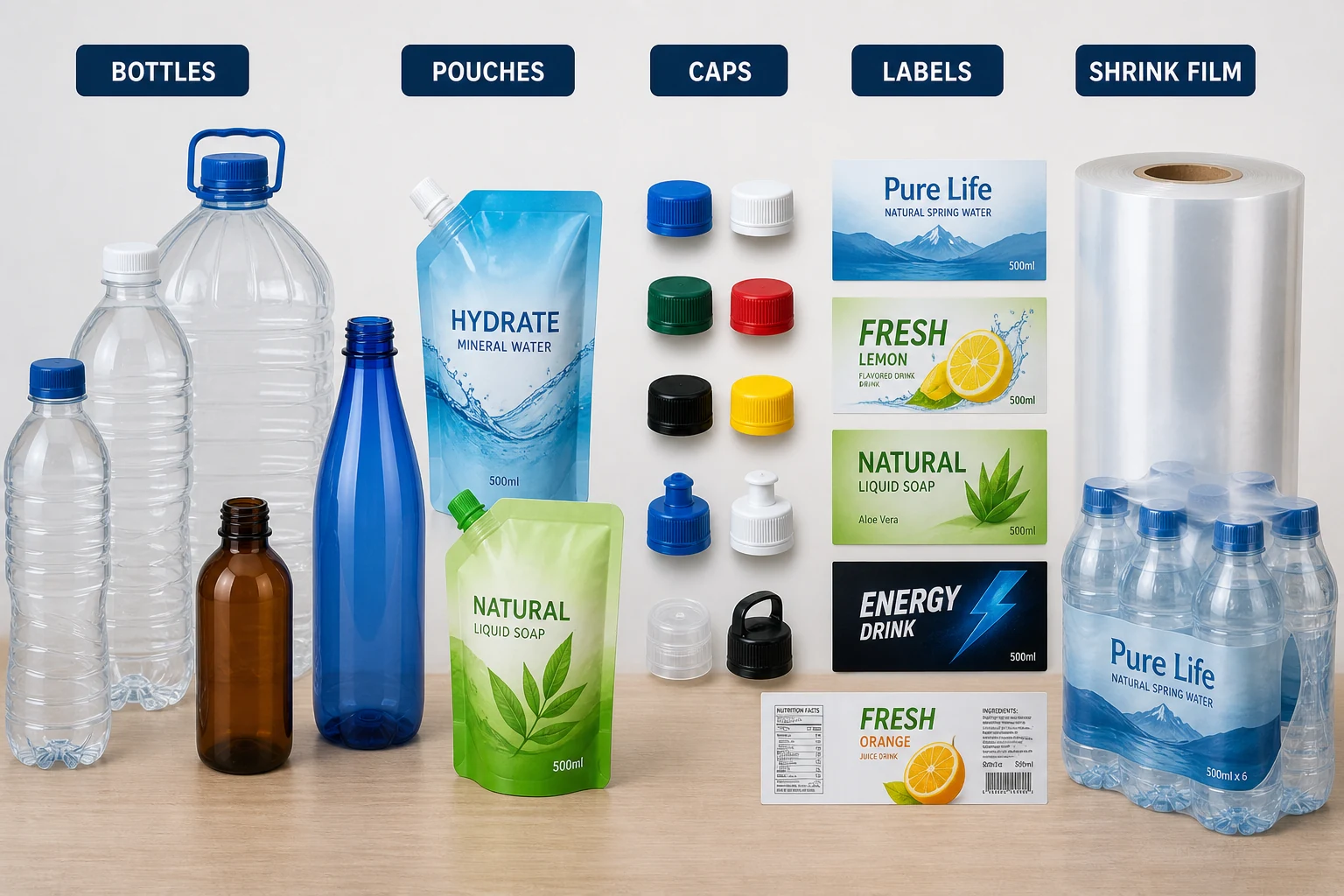
2. Freeze the pack configurationIdentify the bottle or pouch, cap, liner, label, adhesive, sleeve, fitment, seal and any removable parts by supplier reference.
3. Verify the intended statementDistinguish “contains recycled material”, “recyclable”, a disposal instruction and a resin identification code. They do not mean the same thing.
4. Check the evidenceUse current supplier declarations, the applicable RAM assessment where relevant, the chosen labelling-scheme rules and market-specific requirements.
5. Qualify the wordingMake clear whether the claim applies to the body, cap, label or complete pack. Do not imply that every part is recyclable when an attached component prevents that outcome.
6. Control the artworkRetain the approved wording, artwork version, evidence sources, review date and change triggers. Recheck after a component or regulatory change.
Common mistakes

Avoid labels that overstate what the evidence proves

Using PET or HDPE as the complete answer

A resin name identifies the main material, not the whole-pack recycling outcome. Colour, barrier, label, adhesive, sleeve, closure, liner, fitment and product residue can affect the assessment or disposal instruction.

Treating a symbol as proof

The Mobius loop or a resin identification code does not substitute for evidence. The meaning of a mark and the conditions for using it must be understood before artwork approval.

Mixing UK and EU requirements

UK EPR/RAM and EU PPWR are separate regimes. A label prepared for one market should not automatically be carried into another without a market-specific review.

Claiming the whole pack when only one part qualifies

The CMA’s Green Claims Code says environmental claims must not imply that a product is recyclable when only parts are and other parts prevent recycling. State the scope accurately.

Buyer questions

Questions to answer before the artwork is released

Can “recyclable” be printed on the pack?

Only when the business has current evidence for the exact claim, pack configuration and market, and the wording does not overstate the result. Review the body, closure, liner, label, adhesive, sleeve and fitment together.

Is an OPRL label mandatory under UK EPR?

The current GOV.UK RAM guidance says EPR does not impose a recyclability-labelling obligation. OPRL is a separate labelling scheme with its own membership and evidence requirements. Other contractual or market rules may still require a specified label.

Does adding a recycling label make packaging recyclable?

No. A label communicates a decision; it does not change the pack’s material, separability, sorting or reprocessing behaviour. Design and evidence must come first.

What changes when the same product is sold in the EU?

The EU PPWR applies to packaging placed on the EU market and introduces phased harmonised labelling and other requirements. Use the PPWR guide for UK exporters and obtain market-specific advice.

When should a recycling label be reviewed?

Review after a change to material, supplier, label stock, adhesive, ink, coating, sleeve, cap, liner, fitment, pack weight, intended market, collection guidance, assessment methodology or labelling-scheme rules.

Authoritative checks

Use current sources before approving a claim or instruction

Request packaging information for artwork review Open the claims checklist

This guide explains evidence and procurement questions. It is not legal advice or approval to use a particular symbol or claim.