1. Dimensional and assembly fit
Check critical dimensions, neck/closure engagement, fitment position, label panel, pouch opening and film width before using product.
Define what must pass before testing begins, then use the exact components, contents, production method and storage or distribution conditions.
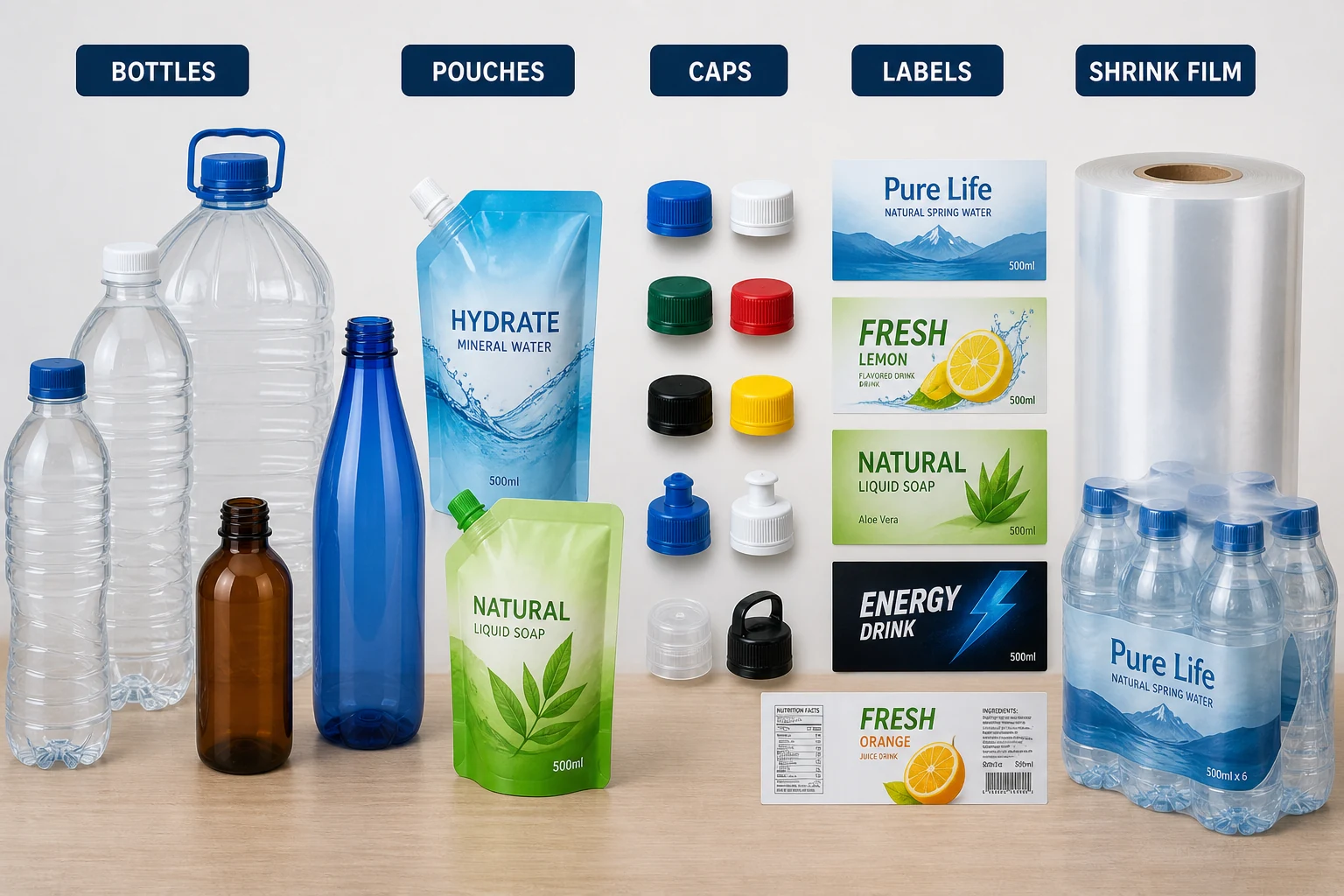
The test plan should identify the exact bottle, closure, pouch, label or film candidates; the product and process conditions; the acceptance criteria; the inspection intervals; and who can approve the result. The number of samples and test duration depend on the risk and application rather than a generic minimum.
For food, chemical, pharmaceutical or other regulated contents, involve the competent product, safety and compliance specialists. Packaging trials do not replace required migration, shelf-life, transport or legal assessments.
| Objective | State the decision: material shortlist, component fit, line trial, shelf-life screen, transport approval or final production release. |
|---|---|
| Samples | Record supplier, reference, batch, material, dimensions and configuration for every component and the control or current pack. |
| Contents | Use production-representative formulation, concentration, particle size, temperature and fill quantity. Record batch and safety handling. |
| Process | Reproduce filling, capping, sealing, labelling, coding, shrink wrapping and handling as closely as the test stage requires. |
| Conditions | Define storage orientation, temperature, humidity, light, time and distribution simulation appropriate to the product. |
| Acceptance | Set measurable or clearly observable pass/fail criteria before testing, including permitted variation and responsible approver. |
Check critical dimensions, neck/closure engagement, fitment position, label panel, pouch opening and film width before using product.
Evaluate feeding, filling access, capping/sealing, labelling, coding, conveying and shrink wrapping without masking basic handling defects.
Fill using the intended product and process. Inspect leaks, stress, swelling, panel change, seal/liner interaction, closure movement, label and appearance.
Use the defined environment, orientation, time and transport tests. Inspect at planned intervals against the criteria.
Confirm repeatability across normal process variation and sufficient consecutive units for the risk-based acceptance plan.
Sign the result, retain approved samples and documents, and define which material, supplier, artwork or process changes trigger review.
Provide the product, candidate format, current pack, first order, forecast, production method, key risks and acceptance criteria. Lancing can confirm which samples and current product information are available. For controlled supplier files, use the technical document checklist.
Request packaging samples and options Browse packaging products
A trial becomes useful evidence when samples, conditions, observations and approval responsibilities are defined before the first pack is filled or sealed.
There is no universal sample quantity. Use enough representative units to expose the expected variation and complete each planned stage, including machine start-up, steady running, storage and distribution checks. The quantity should be justified by product risk, process variation and the decision being made rather than copied from an unrelated project.
Usually, yes. An empty-pack stage can reveal dimensional, assembly and machine-handling problems without using product or masking the cause. Filled-pack tests must follow because contents, temperature, pressure, product contamination and storage can create different failures. Both stages should use the exact components intended for approval.
Define the required seal or leak result, closure operation, label position and adhesion, pack appearance, machine handling, damage tolerance, storage observations and any product-quality checks. State measurement method, inspection timing, allowed variation and who can accept a deviation. Criteria written after the trial invite inconsistent decisions.
Repeat or proportionately requalify when a change can affect critical performance: supplier, material, tooling, dimensions, closure, liner, label, pouch web, fitment, film, product, fill temperature, machine or settings. A documented risk review can define whether a targeted check or a full repeat is needed.
Approval should involve the functions responsible for the actual risks, which may include packaging, production, quality, procurement, product safety, regulatory and sustainability teams. The supplier can support the evidence, but the buyer should identify the authorised approver and retain the signed specification, trial record and approved sample.
Request samples for a controlled trial Plan an automated-line trial