Packaging technical document checklist
Link every technical file to the exact packaging component, revision, supplier and approved finished-pack configuration.
A document is useful only when it identifies the supplied item and current revision.
Packaging evidence often arrives as disconnected data sheets, declarations and emails. A controlled file should show which bottle, pouch, cap, label or film the document covers, who issued it, when it was reviewed and how it connects to the approved finished pack.
Not every project needs every document below. Select the records required by the product, customer, market, tax, EPR and safety obligations. Where evidence is unavailable, treat the claim or specification as unconfirmed rather than filling the gap with an assumption.
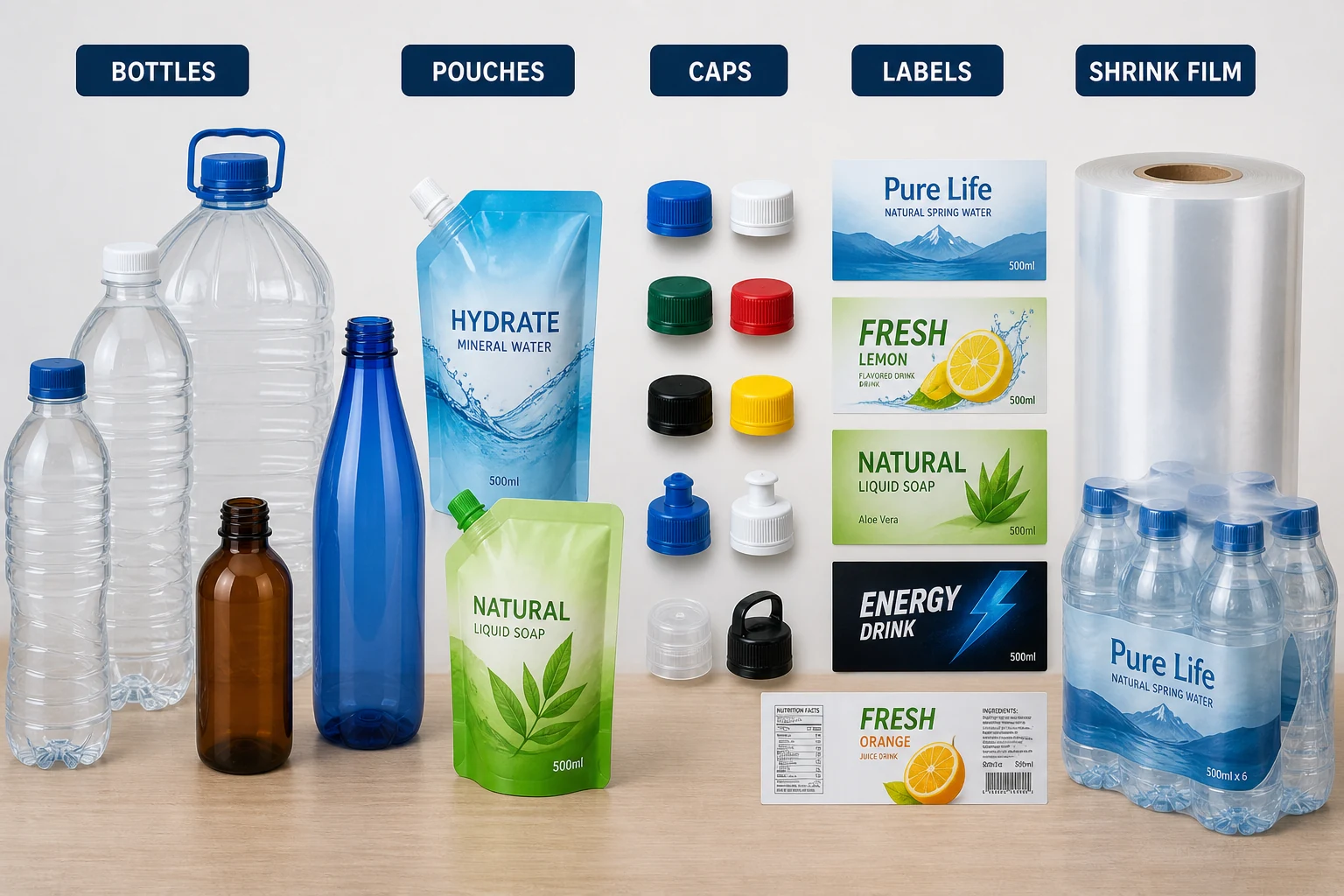
Documents to consider by purpose
| Document | What it should identify | Why it matters |
|---|---|---|
| Product specification | Supplier reference, material, dimensions, tolerances, colour/finish, weight or gauge, construction and revision. | Defines what is being purchased and provides the baseline for inspection and change control. |
| Drawing | Critical dimensions, neck finish, seal or fitment geometry, label panel, roll layout or other interfaces. | Supports closure, line, artwork and component compatibility. |
| Material declaration | Exact component, polymer or layer structure, additives or attached parts where relevant. | Supports technical selection, EPR assessment and customer data requests. |
| Recycled-content evidence | Exact component, percentage, calculation basis, applicable batch/product line and issuer. | Supports tax and marketing records; it is separate from recyclability evidence. |
| Product-contact evidence | Exact material/article, intended use, restrictions, test or declaration basis and applicable jurisdiction. | Required where packaging contacts food or another regulated product; obtain competent review. |
| Recyclability assessment record | Finished-pack components, reporting year, methodology version, data sources, result and reviewer. | Supports relevant EPR reporting and controlled environmental wording. |
| Artwork and print proof | File version, dimensions, colours, barcode/variable data, mandatory text and approval. | Prevents obsolete artwork and links the label or printed pouch to the approved pack. |
| Trial and approval report | Samples, batches, conditions, results, acceptance criteria, deviations and sign-off. | Shows that the actual filled pack and process met the defined requirement. |
| Change notification | Supplier commitment and triggers covering material, site, process, specification or evidence changes. | Determines when technical review and revalidation are required. |
Make the evidence traceable and reviewable
- Assign an internal packaging or bill-of-materials reference to the finished pack.
- List each component and approved supplier reference.
- Store issuer, issue date, revision and review status with every document.
- Record which product, market and artwork each document supports.
- Set review dates for time-sensitive guidance and declarations.
- Archive superseded revisions without allowing them to be used for new orders.
- Define who approves technical, regulatory, quality and artwork changes.
For current UK food packaging guidance, consult the Food Standards Agency packaging and labelling guidance. Product-contact evidence must be reviewed for the exact intended use.
Send the current brief and identify missing evidence
Include the product reference or required format, contents, quantity, forecast, compatibility constraints and the documents needed before purchase. Lancing can confirm which current files are available from the relevant supplier and which points remain subject to sample testing or specialist review.
Use the compatibility test plan for approval evidence, the EPR guide for reporting-year records and the PPT guide for recycled-content evidence.
Request packaging documents and a quote Open the claim checklist