Browse packaging products
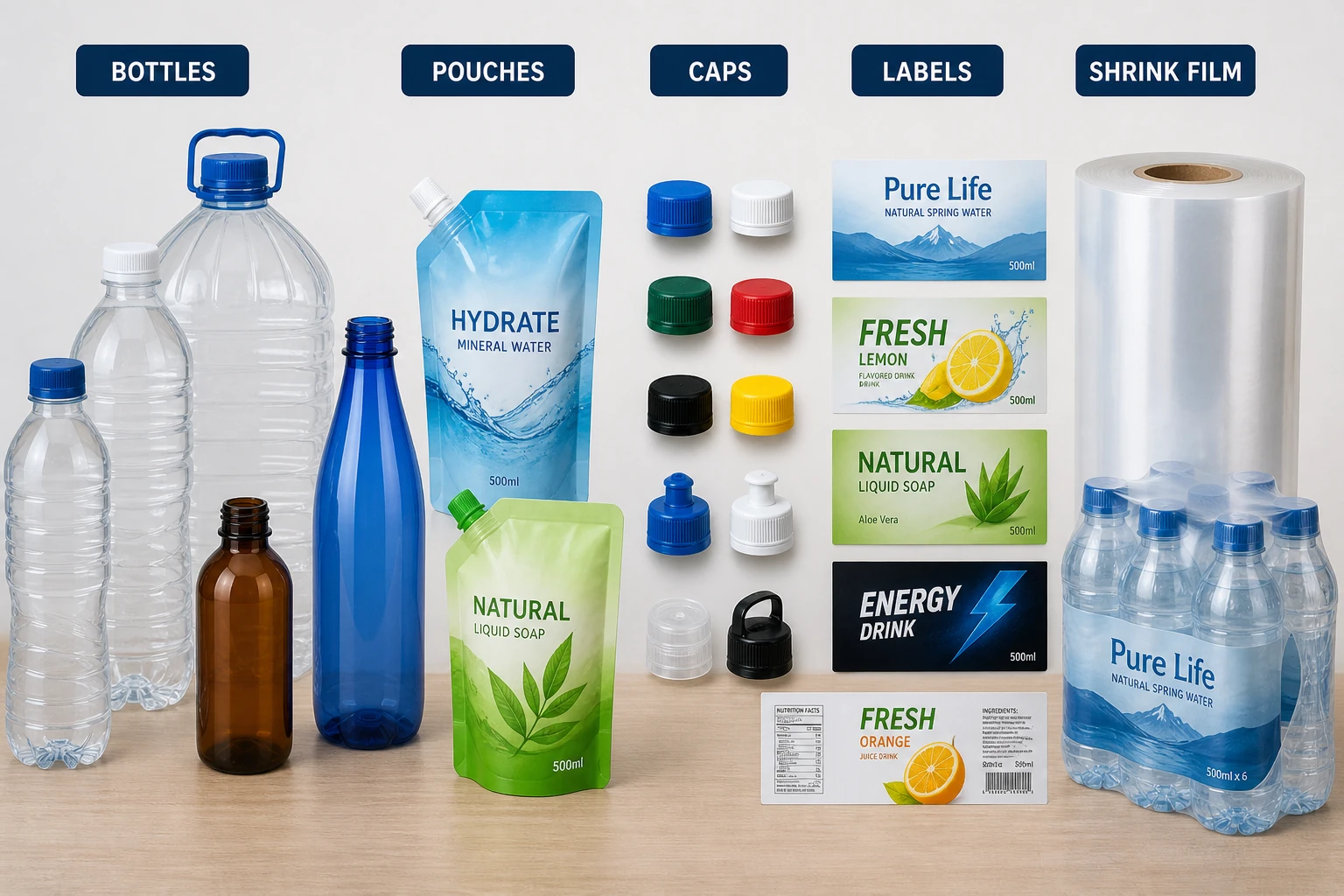
Identify the exact bottles, pouches, closures, labels and film that will form the production bill of materials.
Specify the complete pack as an engineered input to the line. The container or pouch, closure, label, film and product must be represented by controlled dimensions, tolerances, materials and samples. An attractive pack can still be unsuitable for automatic feeding, filling, capping, sealing or labelling if its critical handling characteristics are not stable.
Map every point at which the pack is guided, sensed, opened, filled, closed, labelled, coded or transferred. For each interface, identify the dimension or physical characteristic that controls reliable operation and agree how normal production variation will be represented in the trial.
Line suitability can only be confirmed against production-representative samples, normal manufacturing variation and the intended product. Record the approved packaging references and machine conditions together so later substitutions can be assessed before they reach production.
| Line interface | Packaging control |
|---|---|
| Container or pouch | Critical dimensions, stability, stiffness, opening and handling surfaces |
| Closure or fitment | Thread/fit, liner or plug, tamper feature, feeding and application |
| Label or print | Roll direction, core, pitch, release, sensor contrast and placement area |
| Product and process | Viscosity, particles, foaming, temperature, contamination and fill range |
| Approval | Line trial result, settings, retained samples and change-control triggers |
Critical dimensions depend on the equipment interface. They can include overall height and width, base diameter or footprint, neck position and finish, panel geometry, pouch width and opening, fitment location, label panel, roll pitch and film presentation. Stability, out-of-round, stiffness and centre of gravity can matter as much as nominal size.
Identify each point where the pack is guided, gripped, sensed, opened, filled, capped, sealed or labelled. Supply a drawing and samples from normal production variation, not a single hand-selected unit. The machine supplier should confirm which characteristics are critical to function.
The closure changes feeding, application torque, tamper-band engagement and final height. The label changes surface friction, roll feeding, sensor contrast, placement and downstream handling. A bottle-only trial cannot prove capping or labelling performance, and a pouch trial without the final zipper, spout or print may miss sealing and sensor risks.
Control the full bill of materials and use the intended product where contamination, temperature, foaming or viscosity can affect the process. Link any approved settings to the exact packaging references.
Supply production-representative empty and filled packs, matching closures and liners, label rolls with the correct core and unwind, pouch or film rolls where relevant, product safety information and the expected range of fill conditions. Include target output, current process, utilities and upstream or downstream interfaces, but do not treat a target rate as proven until the trial is complete.
Where machinery is also required, the Lancing packaging machinery site owns the detailed equipment enquiry. This site should provide the controlled packaging input to that process.
Freeze the packaging specification after representative samples have passed empty handling, filled operation, closure or seal checks, labelling or coding and the relevant storage and distribution tests. Record the approved references, drawings, critical dimensions, evidence, settings and retained samples.
Later changes should pass a risk review. A substitution that appears visually identical can still alter friction, stiffness, thread engagement, adhesive release or seal behaviour. Use the document checklist to control revisions.
Identify the exact bottles, pouches, closures, labels and film that will form the production bill of materials.
Convert the proposed line trial into defined samples, conditions, observations and acceptance criteria.
Use the fault guide when intermittent stops may come from either packaging variation or machine condition.
Discuss this packaging requirement Browse all packaging questions