PET versus HDPE bottles
There is no universal winner: choose the exact bottle grade and design that protects the product, runs in production and supports the required evidence.
PET and HDPE solve different bottle-design problems.
PET is commonly selected where clarity, gloss and a relatively rigid bottle are important. HDPE is commonly selected where an opaque or natural finish, squeeze behaviour or a different chemical-compatibility profile is needed. These are screening characteristics, not guarantees for a particular product.
The exact resin grade, recycled-content grade, colour, bottle wall and geometry affect performance. Confirm contents compatibility, filling temperature, closure, label, storage and distribution using the supplied bottle and current technical documentation.
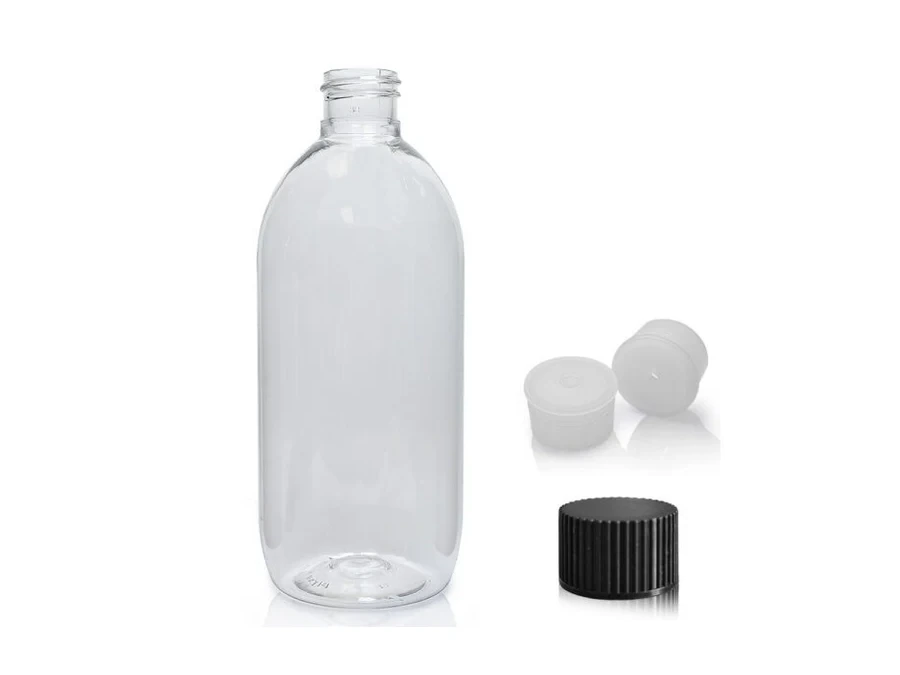
Use the pack requirement to shortlist the material
| Decision factor | PET questions | HDPE questions |
|---|---|---|
| Appearance | Is high clarity, colour transparency or a glossy surface important? Confirm haze and colour for the exact virgin or PCR grade. | Is natural, white or coloured opacity acceptable or preferred? Confirm colour and surface variation for the exact grade. |
| Rigidity and squeeze | Does the bottle need to retain a crisp shape under handling and labelling? | Is controlled squeeze or resilience required? Bottle geometry and wall distribution remain important. |
| Contents | Has the exact PET grade been checked with the product, concentration, flavour/aroma and storage time? | Has the exact HDPE grade been checked for permeation, stress response, odour and chemical interaction? |
| Filling temperature | Is the proposed bottle design suitable for the real fill and cooling process? Do not assume standard PET is suitable for a hot-fill condition. | Will the bottle retain dimensions and closure performance across the actual fill and storage temperature? |
| Barrier and shelf life | What oxygen, moisture, aroma or light protection does the product need, and what data supports the bottle design? | What permeation or light-protection behaviour is required, and does colour or an additional barrier feature affect it? |
| Closure and label | Confirm the complete neck finish, sealing surface, closure, liner and label/adhesive compatibility, including recycling considerations. | Confirm the same pack interfaces and label performance on the actual HDPE surface and after the intended storage. |
| Recycled content | Request evidence for the exact PCR PET percentage and confirm appearance, product-contact and performance implications. | Request equivalent evidence for PCR HDPE and confirm colour, odour, consistency and intended-use requirements. |
| Recyclability assessment | Assess the complete bottle, closure, liner, label, adhesive and other attached components using the current UK reporting-year methodology. Polymer identity alone is not the final rating. | |
Test the filled pack, not an empty bottle in isolation
- Define acceptance criteria. Include appearance, dimensions, closure, leaks, dispensing, label, storage and distribution performance.
- Select exact samples. Use the proposed bottle grade, colour, closure, liner and label.
- Fill by the intended process. Reproduce fill temperature, headspace, capping or sealing and line handling.
- Store and distribute. Use the relevant orientation, temperature, light and transport conditions for the product.
- Inspect at planned intervals. Record mass or volume loss where relevant, leaks, stress, panel change, closure movement, label failure and product changes.
- Control the approval. Retain references, documents, results and an approved sample; define when a supplier or component change requires review.
The packaging compatibility test plan provides a fuller framework.
Information Lancing needs to compare bottle options
Send the contents, fill volume, filling temperature, required appearance, preferred squeeze or rigidity, storage conditions, neck/closure requirement, label method, first order, repeat forecast and any documentation needed. Current minimum order, availability, lead time, material evidence and exact variants will be confirmed for the selected option.
Compare PET bottle guidance, HDPE bottle guidance and the bottle catalogue.
Request bottle material options Review PET label compatibility