Browse bottle ranges
Review rigid container formats, then confirm the exact bottle, neck finish, closure and label as one pack.
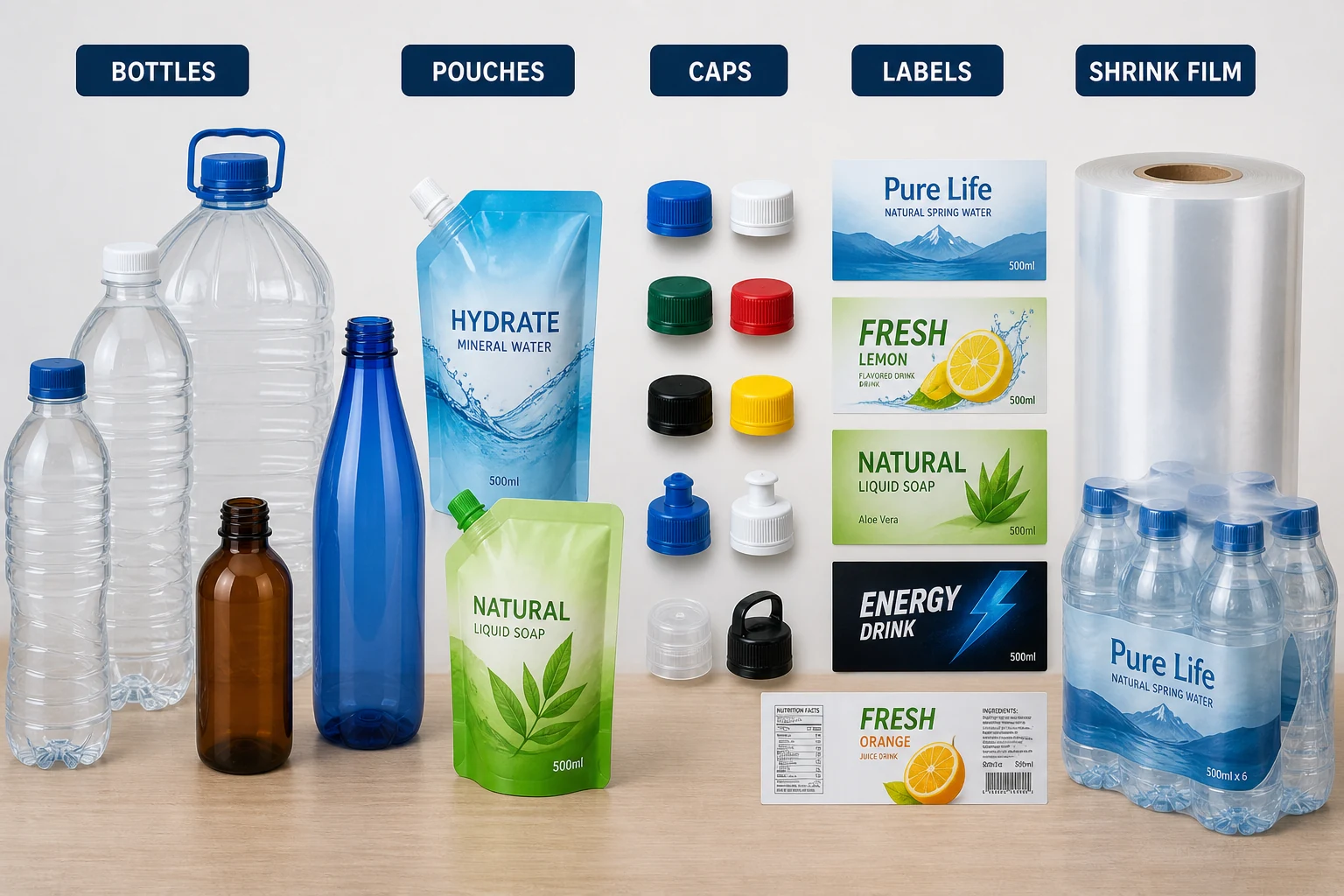
A bottle is usually favoured when rigid handling, controlled neck and closure geometry or strong shelf presentation are central. A pouch is often favoured when low empty-pack weight, compact storage, refill use or flexible dispensing matters. The correct answer depends on the complete product, process and distribution system rather than one sustainability claim.
Define the function that cannot fail: product protection, dispensing, line handling, closure integrity, consumer use or distribution. Then compare both formats against the same requirements and retain the current pack as a control. This avoids treating a change in material weight as the whole decision.
Neither format is inherently suitable for every product. Confirm the shortlisted complete pack with representative contents, the intended filling and closing process, storage and distribution trials, and the evidence needed for any environmental or product-contact claim.
| Decision driver | How it affects the shortlist |
|---|---|
| Rigid handling and repeatable neck/closure geometry | Bottle is often the stronger starting point |
| Low empty-pack weight, compact storage or refill use | Pouch is often the stronger starting point |
| High barrier, hot process or demanding product chemistry | Compare verified structures; do not decide by format name |
| Automatic filling and closing | Trial the exact pack on the intended equipment |
| Recyclability or recycled-content claim | Assess the complete pack and current evidence separately |
A rigid bottle usually has an advantage when the production line needs stable standing, repeatable neck handling, a defined screw or dispensing closure, direct label application and consumer use from a shape that retains its geometry. Bottles can also provide a clear fill-level view or a broad choice of pumps, sprayers, nozzles and tamper-evident closures.
The bottle must still be approved with the actual contents. Resin, wall distribution, shape, fill temperature, headspace and closure can affect panel movement, leakage and shelf life. Compare the PET and HDPE routes, then use filled samples rather than selecting from appearance alone.
A flexible pouch usually has an advantage when empty-pack weight, storage space, refill use, large printable area or controlled collapse during dispensing is important. Zippers, valves and spouts can add convenience, while flat or gusseted formats can reduce unused volume compared with some rigid packs.
The trade-off is that web structure, stiffness, sealant, barrier, fitment and sealing conditions become critical. A pouch that is easy to transport empty may require more careful support during filling and sealing. Compare mono-material and laminated structures and approve the actual sealed pack.
The packaging format must match how the product reaches the pack and how the pack is closed, labelled, coded and transferred. Bottles may use neck or body handling and separate caps; pouches may need opening, support, top sealing or fitment handling. Product viscosity, foaming, particles and fill temperature influence both routes.
For an automated line, supply drawings and representative samples with the closure, label or pouch fitment. The automated-line specification guide explains the dimensions, tolerances and trial information that should be controlled.
Test product compatibility, barrier and shelf-life risk, fill and close quality, leakage, consumer opening and dispensing, label or print durability, distribution damage, case packing and the end-of-life evidence for the finished format. The test should compare the current pack with the candidate under the same defined conditions.
Do not assume a lighter pack is automatically lower impact if it increases product loss or damage. Use the compatibility test plan and record which changes require reapproval.
Review rigid container formats, then confirm the exact bottle, neck finish, closure and label as one pack.
Review flexible formats by pouch structure, opening, zipper or fitment, sealing method and the actual filled product.
Define oxygen, moisture, light, aroma and chemical-protection needs before a material or format is approved.
Discuss this packaging requirement Browse all packaging questions