Mono-material versus laminated pouches
Select a pouch structure by product protection and processing needs, then verify the complete web, fitments and current collection route.
“Mono-material” describes a design approach, not a complete performance or recycling result.
A mono-material pouch is designed predominantly around one polymer family so that layers can remain within a compatible recycling stream. A conventional laminate may combine different materials to deliver stiffness, print, barrier, puncture resistance and sealing performance. The exact structures vary, and both require supplier data.
A lower-complexity structure is useful only if it still protects the contents, seals reliably, survives distribution and has a relevant collection and recycling route. The fitment, zipper, valve, inks and adhesives must be included in the finished-pack review.
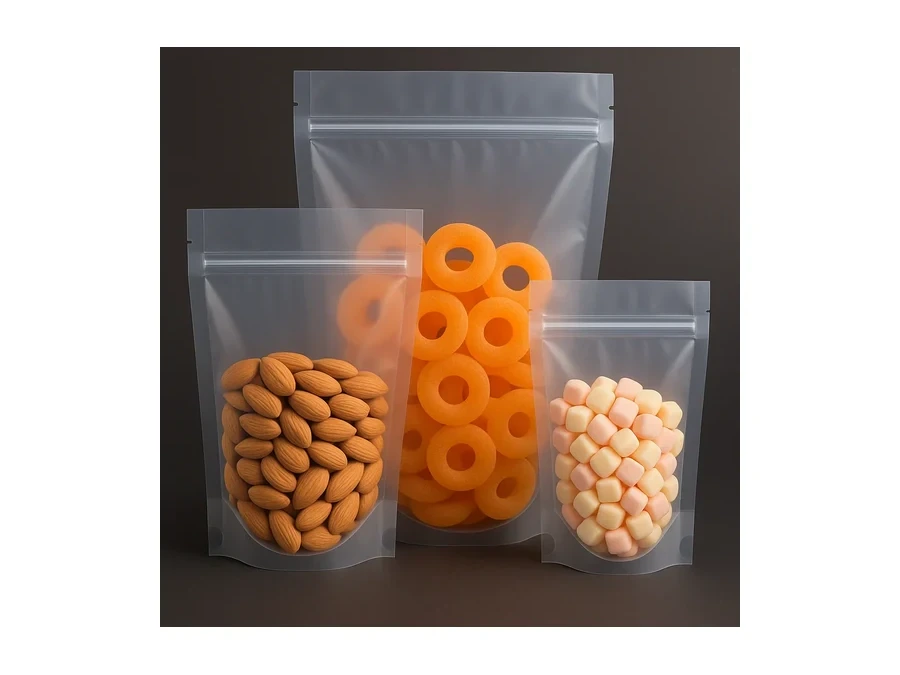
Questions that distinguish the two routes
| Factor | Mono-material route | Laminated route |
|---|---|---|
| Structure | Ask which layers, coatings, tie layers and sealants are within the same compatible polymer family and how the complete web is classified. | Ask for the full layer sequence and purpose of each material; do not rely on the outer paper or film appearance. |
| Barrier | Confirm measured or specified oxygen, moisture, aroma and light performance for the exact web and conditions. | High or tailored barrier may be achieved through additional layers, but the end-of-life route can be more complex. |
| Stiffness and presentation | Evaluate stand-up stability, crease, print appearance and machinability because downgauging or material changes can alter handling. | Different layers can be selected for stiffness and surface finish; confirm the total structure and weight. |
| Sealing | Establish the seal window, contamination tolerance and hot-tack behaviour for the actual sealant and equipment. | Layer design can provide a tailored sealant, but delamination and interlayer compatibility also need control. |
| Fitments | Zippers, valves, spouts and caps should be assessed for material compatibility and attachment performance. | Fitments must still be assessed; a laminate does not automatically solve fitment sealing or recyclability. |
| Recycling evidence | Confirm collection, sorting and reprocessing treatment under the current UK methodology. “Mono” alone is not the rating. | Record the complete multi-material structure and use the same official assessment rather than assuming “not recyclable” from appearance alone. |
Define the barrier before choosing the web
- Identify oxygen, moisture, light, aroma, grease, puncture and seal requirements from the product and intended shelf-life validation.
- Request candidate web specifications and material declarations, including all fitments and closures.
- Run filling and sealing trials using production-equivalent equipment and contamination conditions.
- Evaluate filled-pouch stability, leakage, fitment retention, drop/compression and storage performance.
- Assess the exact structure under the current collection and recyclability methodology for the target UK market.
- Approve and version-control the structure, print, fitments, process settings and sample.
Use the packaging barrier guide to define protection needs and the compatibility plan to structure the trial.
What to send for a pouch material quote
Provide contents, fill weight/volume, filling temperature, desired shelf life, format and dimensions, zipper/valve/spout needs, barrier concerns, print, filling and sealing method, order quantity, forecast and target market. Lancing will confirm the current pouch options and which details require supplier verification.
Browse pouch products, the spouted pouch range and the pouch quote guide.
Request pouch material options Review UK recyclability assessment