UK packaging EPR and recyclability assessment
Understand the role of the reporting year, complete-pack components, collection, sorting and evidence when using the UK Recyclability Assessment Methodology.
Use these guides to move from a broad packaging-material search to a documented, testable and quote-ready complete-pack specification.
Packaging decisions span product protection, production compatibility, component fit, environmental evidence and controlled supply. The catalogue identifies products and formats; this technical section explains the questions, tests and documents needed before a buyer treats an option as approved.
Each guide is written for manufacturers, packaging managers, procurement teams and sustainability specialists. It distinguishes general selection guidance from a verified specification for a particular product. Exact material declarations, compliance documents, recycled-content percentages, stock, minimum order and lead time must be confirmed for the selected item.
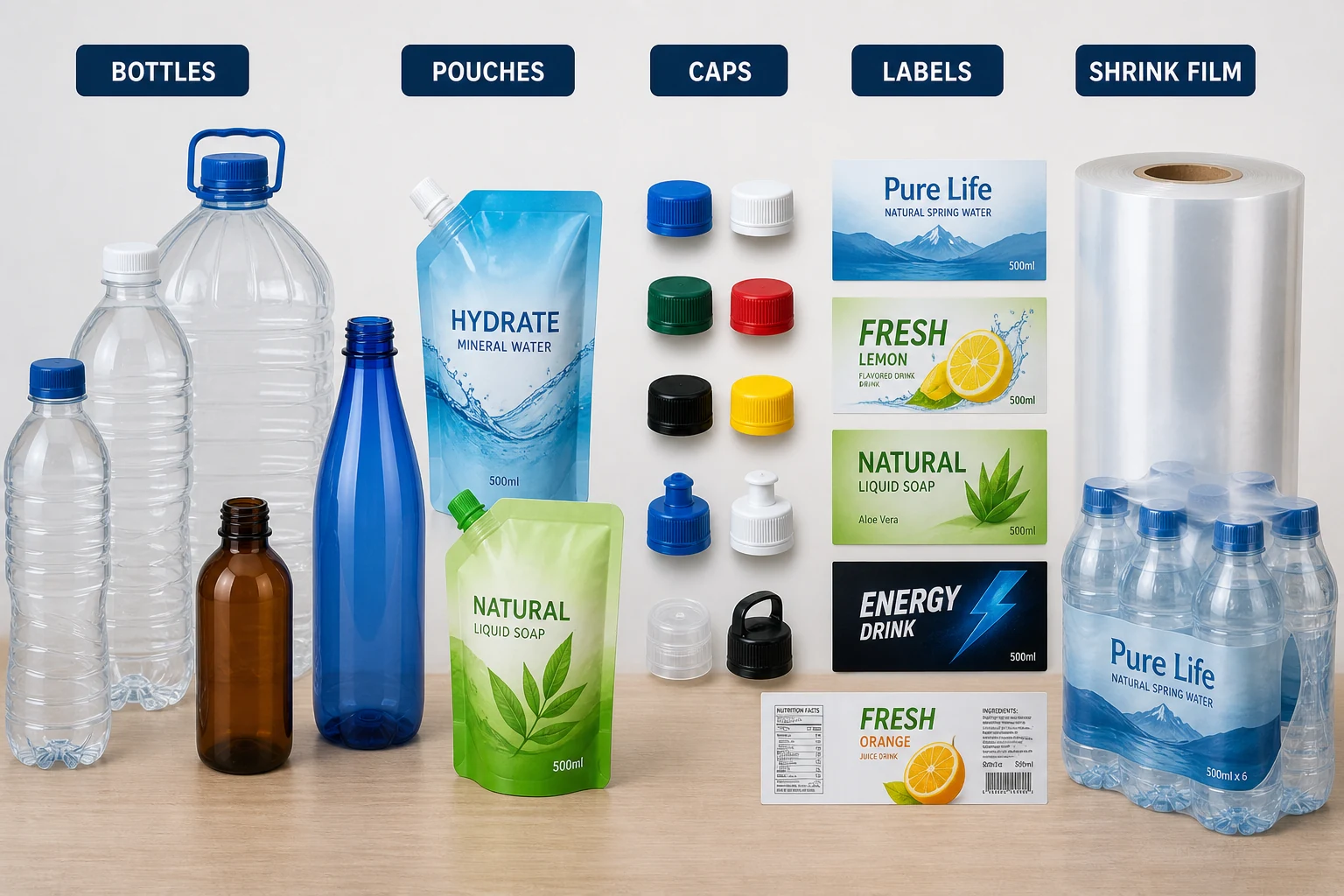
Understand the role of the reporting year, complete-pack components, collection, sorting and evidence when using the UK Recyclability Assessment Methodology.
Separate tax thresholds and product-line records from recyclability claims, and identify the evidence to request for recycled plastic content.
Compare appearance, squeeze, barrier, temperature, compatibility, closures, labels and approval tests.
Compare barrier, stiffness, sealing, fitments, print and end-of-life evidence for flexible packs.
Control label construction, coverage, application and evidence as part of the complete PET bottle assessment.
Compare film families by pack duty, equipment, roll presentation, sealing and trial criteria.
Translate oxygen, moisture, light, aroma and chemical-protection needs into supplier data and shelf-life tests.
Define samples, conditions, test stages, acceptance criteria and change-control triggers for the finished pack.
Control specifications, declarations, drawings, recycled-content evidence, artwork and supplier change notifications.
The guides answer different parts of the approval process. Use them together, then confirm the exact product data and retain a signed, version-controlled pack specification.
Begin with the decision that is blocking the project. Use the material comparison when the format is undecided, the barrier guide when shelf-life protection is unclear, the compatibility plan when candidates exist, and the document checklist before approval. The packaging question centre organises additional selection and troubleshooting questions.
Supplier data describes the item as supplied; an approved specification adds the buyer’s intended contents, process, closure or fitment, label, test conditions, acceptance criteria and controlled version. Supplier data is evidence for the decision, but it does not by itself prove that the finished pack is suitable for a particular product or production line.
A sample check is insufficient when risk depends on time, temperature, filled contents, distribution, repeated machine handling, seal formation or a component interaction that cannot be seen immediately. Use staged testing and record the conditions. The compatibility test plan explains how to set acceptance criteria before testing.
Record the source, title, publication or update date, reporting period and date accessed in the project file. Recheck the official source before a new reporting cycle or packaging change. For example, use the RAM version that applies to the relevant EPR reporting period rather than relying on a saved summary from an earlier year.
Review any change to material, supplier, tooling, dimensions, neck finish, liner, adhesive, ink, coating, fitment, artwork coverage, filling conditions, machine settings or distribution route that can affect a critical requirement. The scale of retesting should follow the risk and the evidence that remains applicable, not a blanket assumption that every change is equivalent.
Discuss a technical packaging brief Open packaging questions
These guides address high-value questions that are separate from material selection: how EPR fee modulation works, what can be said on a UK recycling label, what changes for plastic-film collection in England, and what UK exporters need to control for EU PPWR.
Published red, amber and green treatment, buyer records, substitutions and the boundary between supplier data and producer liability.
Current legal position under EPR, environmental-claim evidence, consumer instructions and market-specific artwork control.
England’s collection timetable, current exclusions, flexible-pack structure and the difference between collection and full recyclability.
Initial application from August 2026 and the technical-document, recyclability, label and procurement work needed for EU sales.